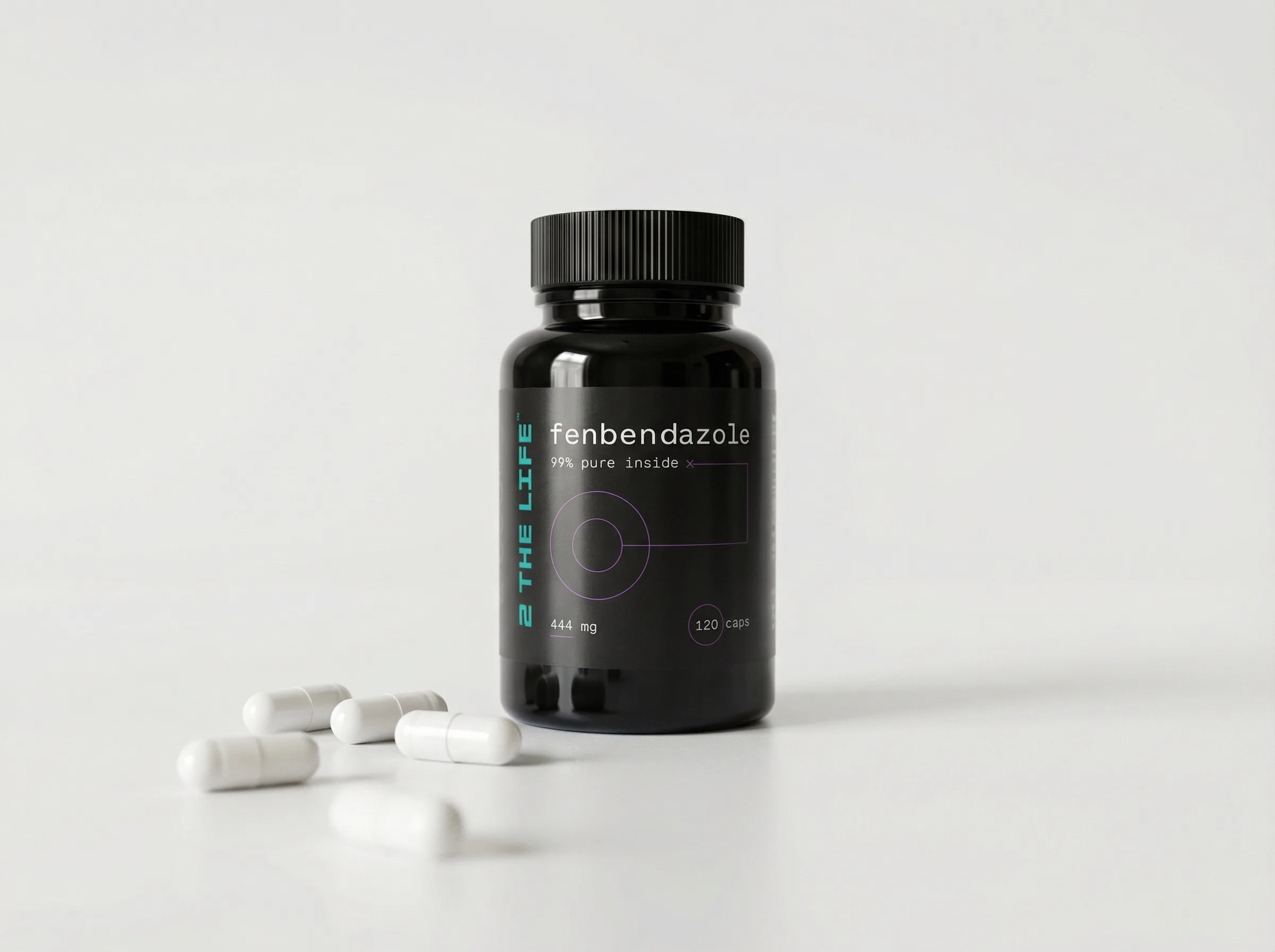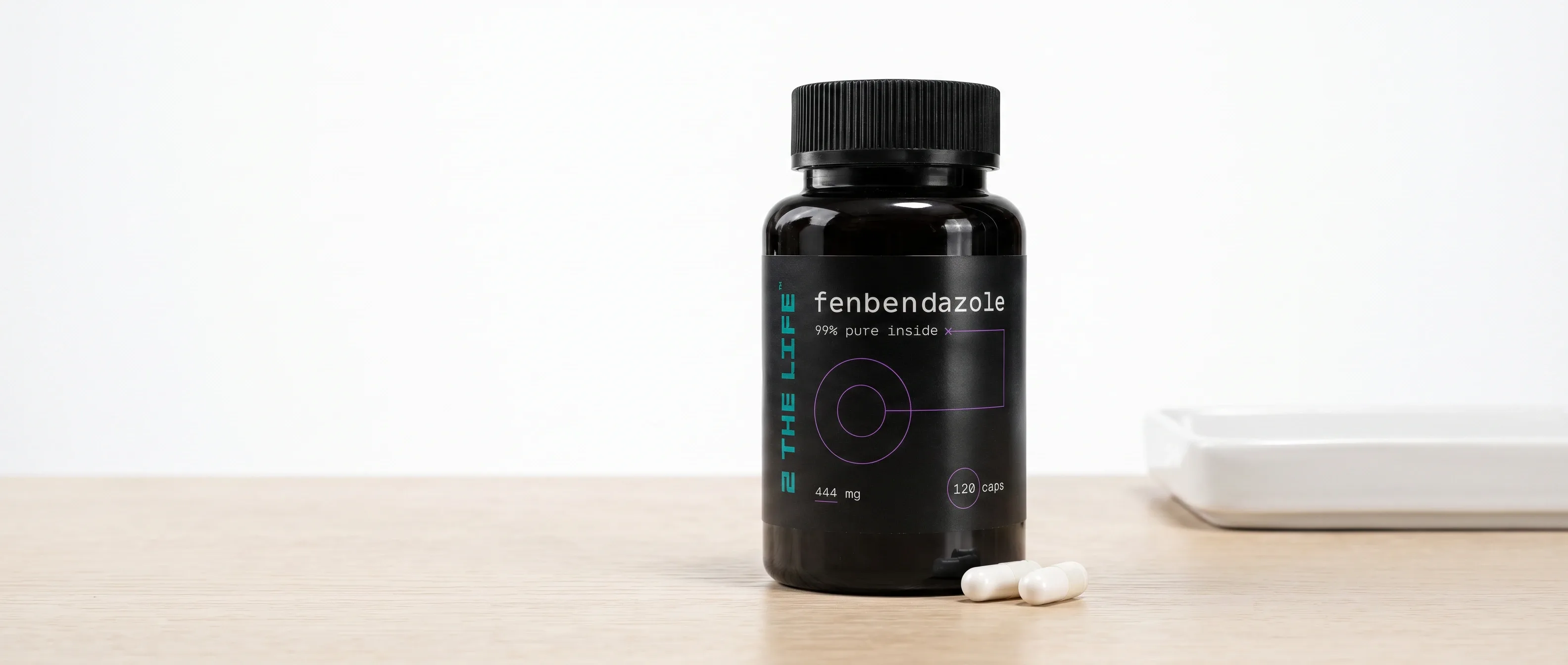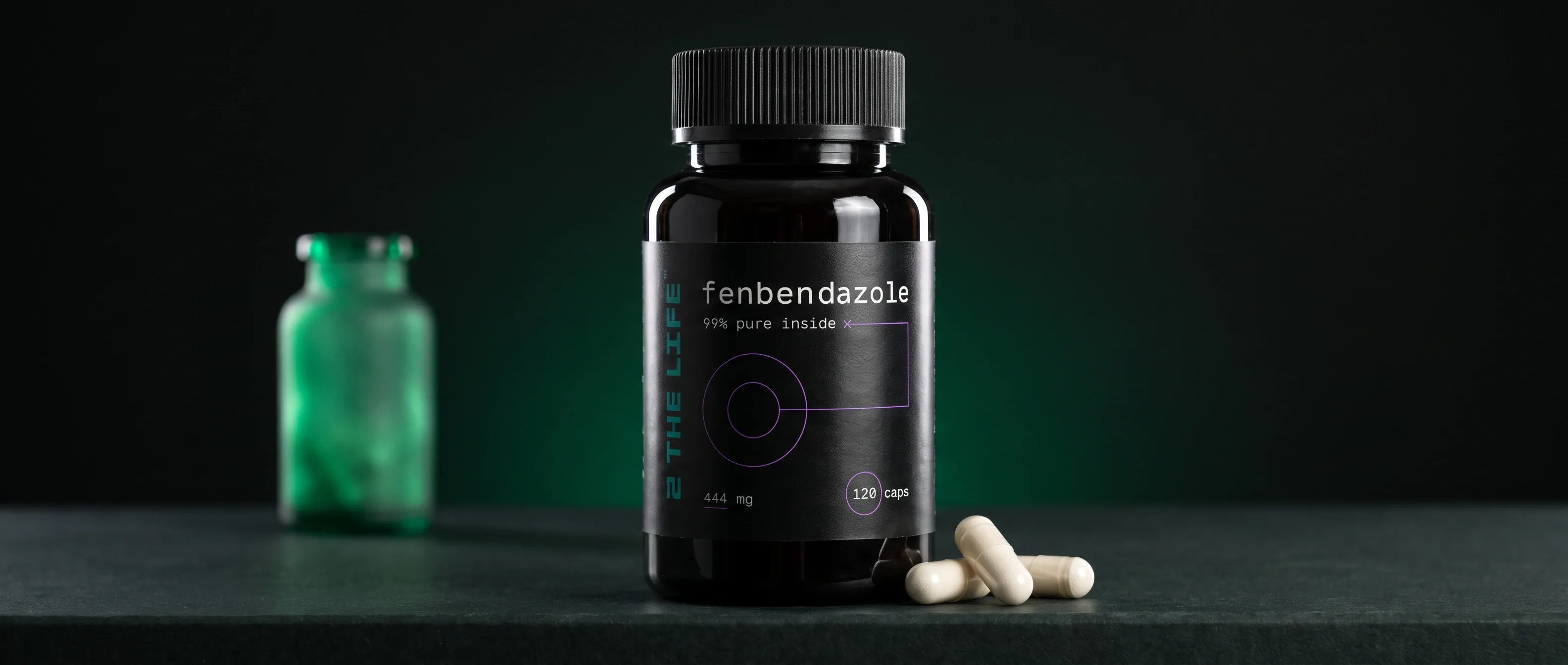
Getting fenbendazole dosing right is one of the most common questions people have when starting a protocol. This guide covers every dosing consideration — from the original Joe Tippens schedule to higher-dose approaches, cycling patterns, absorption optimization, pharmacokinetics, and safety monitoring — so you can make an informed decision in partnership with your healthcare provider.
Why Dosing Fenbendazole Is Different From Typical Supplements
Fenbendazole was developed and approved as a veterinary anthelmintic (dewormer), not as a human supplement. There is no FDA-approved human dose, no formal Phase I dose-escalation trial in people, and no pharmaceutical package insert to reference. Instead, human dosing protocols have been assembled informally by patients, caregivers, and integrative practitioners — most notably Joe Tippens, whose widely circulated personal account became the template that almost every subsequent protocol builds on.
This matters because it means dosing guidance is based on anecdotal experience, extrapolation from veterinary pharmacology, and a growing body of preclinical (cell culture and animal) research rather than controlled human trials. Understanding this context is essential before discussing specific numbers.
The Two Standard Doses
Two doses dominate fenbendazole protocols: 222 mg and 444 mg per day. The 222 mg dose traces directly to Joe Tippens' original story — one packet of veterinary Panacur C. The 444 mg dose emerged as practitioners recognized fenbendazole's very low oral bioavailability and concluded that doubling the dose was needed to achieve meaningful tissue concentrations.
Bioavailability is the crux of the debate. Fenbendazole is poorly absorbed from the gastrointestinal tract in most species — veterinary pharmacokinetic studies in sheep and cattle report absolute bioavailability often below 5–10%, with the majority of an oral dose passing through unabsorbed or being metabolized by gut flora before reaching systemic circulation. Because human pharmacokinetic data is sparse, the 444 mg camp argues that a built-in safety margin justifies doubling the dose to compensate for this inefficient absorption, especially given fenbendazole's wide margin of safety at veterinary doses many times higher.
For a deeper comparison, see our{' '} 222mg vs 444mg guide.
The Cycling Schedule
Fenbendazole is not taken daily without breaks. The standard cycling schedule is:
- 3 days on / 4 days off — the original Joe Tippens schedule
- 5 days on / 2 days off — an alternative used by some practitioners
- 4 weeks on / 1 week off — a longer macro-cycle sometimes layered on top of the daily on/off pattern
The cycling serves two purposes: it gives the liver periodic recovery time, and there is a theoretical argument that intermittent dosing may reduce the ability of cancer cells to develop resistance mechanisms against the drug. This concept mirrors metronomic and pulsed dosing strategies used with conventional chemotherapeutics, where intermittent exposure can limit compensatory upregulation of drug-efflux pumps and stress-response pathways in target cells.
Benzimidazole anthelmintics, including fenbendazole and mebendazole, act primarily by binding beta-tubulin and destabilizing the microtubule network required for mitosis and intracellular transport [1]. Continuous, uninterrupted exposure to a microtubule-disrupting agent is not how these compounds are used even in oncology drug development — vinca alkaloids and taxanes, which share a related mechanism, are administered on cyclical schedules for the same reason: to balance cytotoxic pressure against normal tissue recovery.
How to Take Fenbendazole for Maximum Absorption
Fenbendazole is a Class II compound under the Biopharmaceutics Classification System — meaning it has low water solubility but high permeability once dissolved. The practical takeaway:
- Always take with a fatty meal. Olive oil, avocado, full-fat yogurt, butter, or coconut oil all work. The fat creates micelles that help solubilize fenbendazole in the gut and promotes lymphatic uptake, a pathway well documented for other poorly water-soluble drugs.
- Vitamin E succinate — part of the Joe Tippens protocol — also acts as a fat-soluble carrier and may enhance absorption. Some practitioners substitute other fat-soluble co-administrations, such as CBD oil suspended in MCT oil, for a similar effect.
- Do not take on an empty stomach. Absorption drops dramatically without dietary fat. Veterinary labeling for benzimidazole dewormers in ruminants specifically notes that co-feeding increases systemic exposure, and the same solubility-driven logic applies in humans.
- Consider splitting the daily dose into two administrations with meals rather than one large dose, which some users report improves GI tolerance without altering total daily intake.
Note: Grapefruit and grapefruit juice can inhibit CYP3A4 and intestinal P-glycoprotein, enzymes and transporters involved in the metabolism of many benzimidazole-class drugs. While specific human interaction data for fenbendazole is lacking, it is prudent to avoid grapefruit products around dosing times until more is known.
The Full Joe Tippens Protocol Stack
The{' '} Joe Tippens protocol{' '} is more than fenbendazole alone. The original daily stack:
| Supplement | Dose | Schedule |
|---|---|---|
| Fenbendazole | 222 mg (or 444 mg) | 3 days on / 4 days off |
| Vitamin E succinate | 400–800 IU | Daily |
| Curcumin (bioavailable) | 600 mg | Daily |
| CBD oil | 25 mg | Daily |
The rationale behind pairing fenbendazole with curcumin and CBD is largely mechanistic and additive rather than proven through clinical trials: curcumin has documented effects on NF-κB signaling and oxidative stress pathways, while cannabinoids have been studied for their interactions with apoptotic and autophagic pathways in various cell lines. None of these combinations have been tested together in controlled human trials, so the stack should be understood as an empirically assembled protocol rather than a validated regimen. For a broader discussion of the evidence behind the anticancer rationale, see our{' '} fenbendazole cancer protocol overview.
Dosing by Body Weight
In veterinary medicine, fenbendazole is dosed at approximately 50 mg/kg for a single treatment course in companion animals, with some parasite-specific protocols going higher. For a 70 kg (154 lb) human, that would be roughly 3,500 mg — far above any human protocol. The human doses of 222–444 mg represent roughly 3–6 mg/kg, which is well below the veterinary range and contributes to the drug's favorable safety profile at these levels.
There is no established weight-based dosing protocol for humans. The flat 222 mg and 444 mg doses are used regardless of body weight in all major community protocols. This is a notable departure from standard pharmacological practice, where dosing is almost always weight- or body-surface-area-adjusted, particularly for drugs with a narrow therapeutic index. Because fenbendazole has a wide safety margin in veterinary use — dogs and livestock tolerate multi-week courses at much higher per-kilogram doses without significant toxicity — the flat-dose approach in humans has generally not raised acute safety concerns at 222–444 mg, but it does mean that a 50 kg individual and a 110 kg individual are taking very different relative doses.
Should Larger or Smaller Individuals Adjust Their Dose?
Some practitioners suggest that individuals at the higher end of the body-weight spectrum may consider the 444 mg dose rather than 222 mg, while smaller individuals or those new to the protocol may want to start at 222 mg and assess tolerance before increasing. This is a pragmatic, not evidence-based, adjustment and should be discussed with a knowledgeable clinician, particularly for anyone with pre-existing liver disease, on other hepatically metabolized medications, or with a low body-mass index.
Safety Monitoring
Fenbendazole is generally well-tolerated at these doses, and its long history of veterinary use has produced a substantial toxicology database showing a wide margin between therapeutic and toxic doses in animals. However, responsible human use — particularly outside of a formal clinical trial — requires proactive monitoring:
- Liver enzymes (ALT, AST) — check every 4–6 weeks. Fenbendazole is metabolized hepatically via oxidation to fenbendazole sulfoxide (oxfendazole) and further to fenbendazole sulfone, a pathway that places metabolic load on the liver. If enzymes rise above 2× the upper limit of normal, pause the protocol and consult your physician.
- Complete blood count (CBC) — fenbendazole can theoretically affect white blood cell counts, as some benzimidazoles have been associated with bone marrow suppression at high or prolonged veterinary exposures. Monitor every 2–3 months.
- GI symptoms — mild nausea, bloating, or loose stools are the most common side effects. Usually resolve within the first 1–2 weeks. Taking the dose with food, and avoiding very large single doses on an empty stomach, minimizes this.
- Signs warranting immediate discontinuation — jaundice, dark urine, unusual bruising or bleeding, persistent vomiting, or marked fatigue should prompt stopping the protocol and seeking medical evaluation.
- Medication interactions — fenbendazole shares metabolic pathways with other benzimidazole and azole-class drugs. Anyone taking warfarin, other hepatically cleared medications, or drugs with narrow therapeutic windows should review their full medication list with a pharmacist or physician before starting.
Combining Fenbendazole with Ivermectin
Many protocols now combine fenbendazole with{' '} ivermectin. The rationale: they target cancer through completely different mechanisms — fenbendazole disrupts microtubules and glucose uptake [1,3], while ivermectin modulates multiple signaling pathways including Wnt/β-catenin and AKT/mTOR, both of which have been implicated in cancer cell proliferation and survival in preclinical models [4].
When combining, both agents are typically cycled on the same schedule (3 on / 4 off). Ivermectin is usually dosed at 0.5–1 mg/kg on dosing days. As with fenbendazole, no controlled human trial has established this combination's safety or efficacy for oncologic use, and both drugs are metabolized through overlapping hepatic pathways, which theoretically compounds liver monitoring needs when used together.
Pharmaceutical-Grade vs. Veterinary-Grade
The original Joe Tippens protocol used veterinary Panacur C. However, pharmaceutical-grade fenbendazole offers several advantages:
- Purity: 99%+ verified by Certificate of Analysis
- Consistency: Each capsule delivers a precise, verified dose
- Formulation: Designed for human consumption, without animal-grade binders, flavoring agents, or fillers intended for animal palatability
- Testing: Third-party lab tested for heavy metals and contaminants
Veterinary formulations are manufactured to a standard appropriate for animal deworming, not for the precision dosing and purity expectations of long-term human self-administration. Excipients, granule size, and inactive ingredients in veterinary products are not evaluated for human tolerability, which is a meaningful consideration for anyone planning months of continuous use.
Practical Tips for Starting a Protocol
- Start with baseline labs. Get a comprehensive metabolic panel and CBC before your first dose so you have a true baseline for comparison.
- Begin at the lower end. Many practitioners recommend starting at 222 mg for the first 1–2 weeks even if you plan to move to 444 mg, to assess GI tolerance.
- Keep a symptom log. Track energy, appetite, GI symptoms, and sleep quality daily — patterns are easier to spot in writing than in memory.
- Pair every dose with fat. Consistency in absorption matters more than the specific fat source; pick one that fits your diet and stick with it.
- Set a recheck schedule for liver enzymes and don't skip it, even if you feel fine — hepatic changes can precede symptoms.
- Loop in your physician, even if they are unfamiliar with the protocol. Sharing your regimen allows for informed interpretation of lab results and awareness of drug interactions.
Quick-Reference Dosing Summary
| Protocol | Dose | Schedule | Take with |
|---|---|---|---|
| Joe Tippens (original) | 222 mg | 3 on / 4 off | Fatty meal + Vit E |
| Higher-dose adaptation | 444 mg | 3 on / 4 off | Fatty meal + Vit E |
| Extended cycle | 222–444 mg | 5 on / 2 off | Fatty meal + Vit E |
Recommended Products
All products are independently lab-tested for purity (99%+) and ship from the United States.
Frequently Asked Questions
What is the standard fenbendazole dose for humans?
The most widely referenced dose is 222 mg per day (from the Joe Tippens protocol), taken 3 days on and 4 days off. Many practitioners now prefer 444 mg for improved bioavailability.
Should I take fenbendazole with food?
Yes — always take fenbendazole with a fat-containing meal. Fenbendazole is fat-soluble and virtually insoluble in water. Taking it with healthy fats (olive oil, avocado, butter) can increase absorption significantly.
How long does a typical fenbendazole protocol last?
Most protocols run for at least 3–6 months. Some users continue indefinitely at a maintenance dose. There is no established endpoint — it depends on your goals and your healthcare provider's guidance.
Can I take fenbendazole every day without cycling?
It is not recommended. The standard 3-on/4-off schedule allows the liver to recover between doses. Continuous daily use may increase the risk of elevated liver enzymes.
What liver tests should I monitor while taking fenbendazole?
At minimum, check ALT and AST every 4–6 weeks. A comprehensive metabolic panel (CMP) is ideal. If enzymes rise above 2× the upper normal limit, pause and consult your physician.
Is 222 mg or 444 mg better?
222 mg follows the original Joe Tippens protocol. 444 mg is preferred by many practitioners who cite fenbendazole's low oral bioavailability. Both are considered safe at these doses. See our detailed comparison guide for more.
This content is for informational purposes only and does not constitute medical advice. Always consult a qualified healthcare provider before starting any new supplement protocol, especially if you have an existing medical condition or are taking other medications.
References
- Dogra N, Kumar A, Mukhopadhyay T. "Fenbendazole acts as a moderate microtubule destabilizing agent and causes cancer cell death." Scientific Reports, 2018. pubmed.ncbi.nlm.nih.gov/30093705
- Tippens J. "My Cancer Story Rocks — original fenbendazole protocol." mycancerstory.rocks, 2019. mycancerstory.rocks
- Florio R, et al. "Fenbendazole affects cell viability through p53-dependent pathways." Cancers (Basel), 2020. pubmed.ncbi.nlm.nih.gov/33143364
- Son DS, et al. "The antitumor potentials of benzimidazole anthelmintics as repurposing drugs." Oncotarget, 2020. oncotarget.com/article/27799
- Park D, et al. "Benzimidazoles as anticancer agents: a review on molecular mechanisms." Journal of Enzyme Inhibition and Medicinal Chemistry, 2022. pubmed.ncbi.nlm.nih.gov/36300600