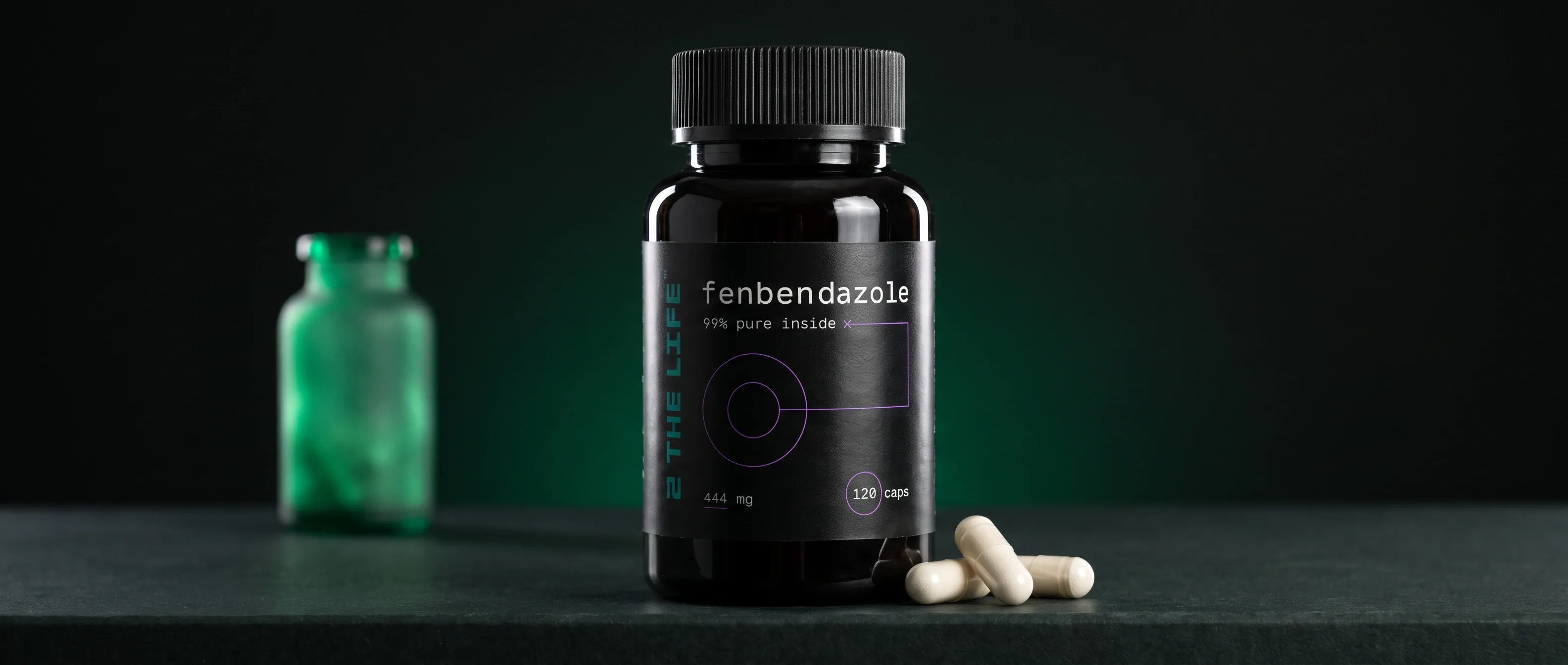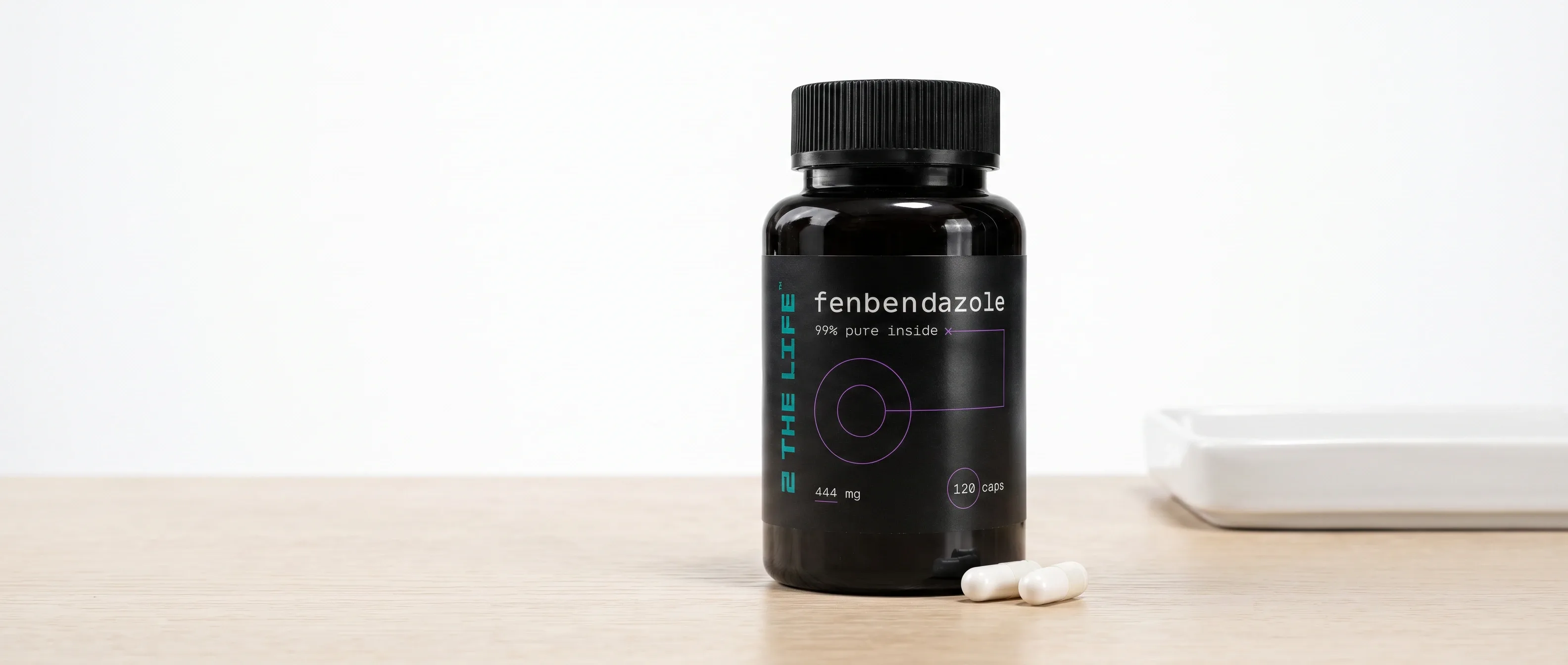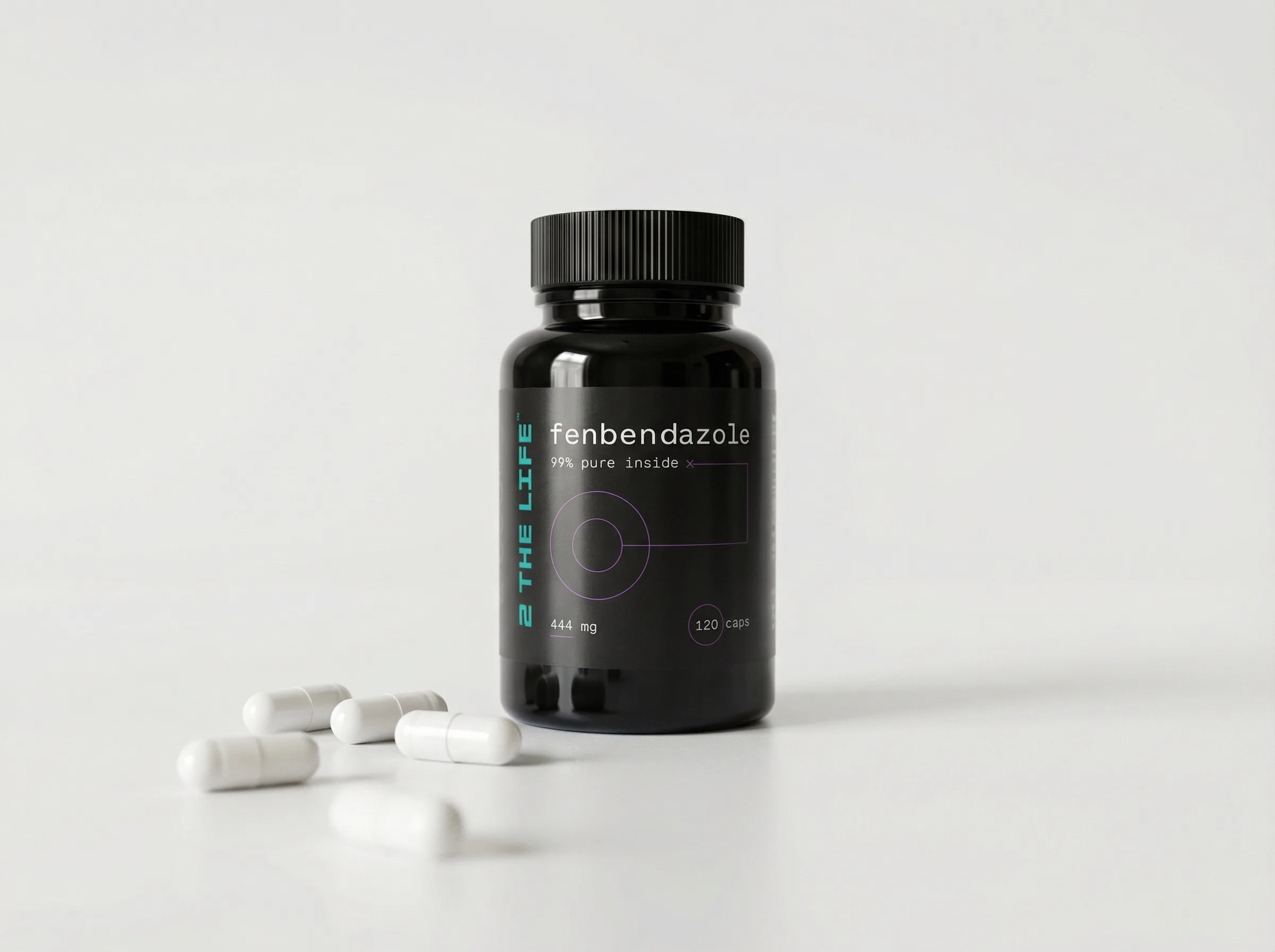
The difference between fenbendazole 222 mg and 444 mg is a product specification: the declared amount of fenbendazole in each capsule. The larger number does not establish a better result, suitability for a person or a validated treatment. This comparison explains the labels and the questions that remain outside them.
Product information and evidence reviewed: September 10, 2026.
What differs in these two listings
The current 2TheLife listings describe the following characteristics. These are catalog specifications, not independently verified results for a particular batch.
| Characteristic | 222 mg product | 444 mg product |
|---|---|---|
| Active ingredient | Fenbendazole | Fenbendazole |
| Amount per capsule | 222 mg | 444 mg |
| Capsules per bottle | 120 | 120 |
| Declared capsule shell | Gelatin | Gelatin |
| Human-use instruction | Not intended for human consumption | Not intended for human consumption |
The declared amount in the 444 mg capsule is twice the declared amount in the 222 mg capsule. That is a comparison of label quantities. It does not establish clinical equivalence, interchangeability or a reason to select either product for personal use.
Check the current 222 mg product information and 444 mg product information when verifying a listing; specifications can change. The intended-use limitation comes from the site's Terms of Service.
Amount, purity and batch testing answer different questions
A milligram amount describes quantity. A purity statement concerns the material assessed by a particular test. Neither phrase, by itself, tells you everything about a finished capsule. To understand a certificate, ask what sample was tested, which method was used and whether the report identifies the same product and lot.
Before relying on a quality statement, request the supporting documentation. Useful questions include whether the result concerns starting material or the finished product, whether ingredient quantity was tested, and which contaminants were assessed. A report should be read within the limits of the measurements it actually contains. An absent test cannot be assumed to have passed.
Certificates of Analysis are available on request through our Lab Testing page. Contact the team for the relevant product and lot information. A certificate describes tested material; it does not establish that the product treats a disease or is suitable for human consumption.
A larger label number is not stronger clinical evidence
The frequently cited Dogra study investigated fenbendazole in cells and mouse models. It did not compare these two 2TheLife products in patients. Its preclinical findings therefore cannot rank the products by human benefit or establish that either label amount is a safe human regimen. [2]
Labels such as standard, advanced or high strength should be read as product positioning unless supported by a clearly defined, relevant comparison. They do not resolve clinical questions. Explanations for a proposed effect are not the same as measurements of benefit in patients.
Veterinary approval does not select a human product
The FDA's 2026 Defendazole announcement concerns a veterinary suspension approved for specified parasites in cattle and goats. That decision does not approve either capsule listing for human use. Fenbendazole's lack of FDA approval for human use is also noted in a published human safety report. [1] [3]
That 2024 report describes severe liver injury associated with self-administration. It is a safety signal, not a comparison of these two product strengths or a measurement of risk at either label amount. It cannot justify calling the smaller product a safe starting option. [3]
Use this comparison to understand product information, rather than to plan treatment. For the separate question of why label strength cannot become an approved human regimen, read our guide to human evidence and its limits. The research overview examines the cancer claims and their evidence.