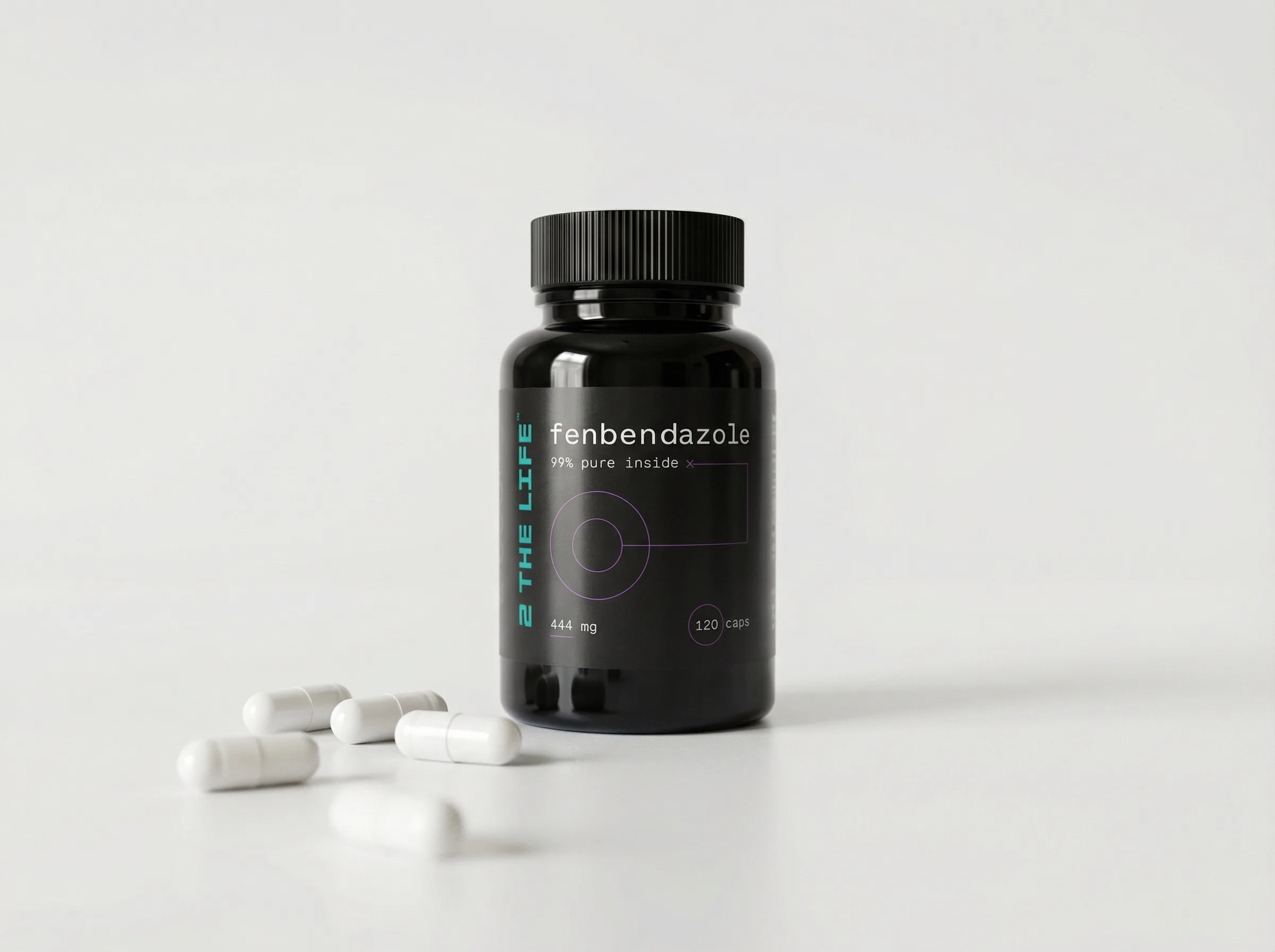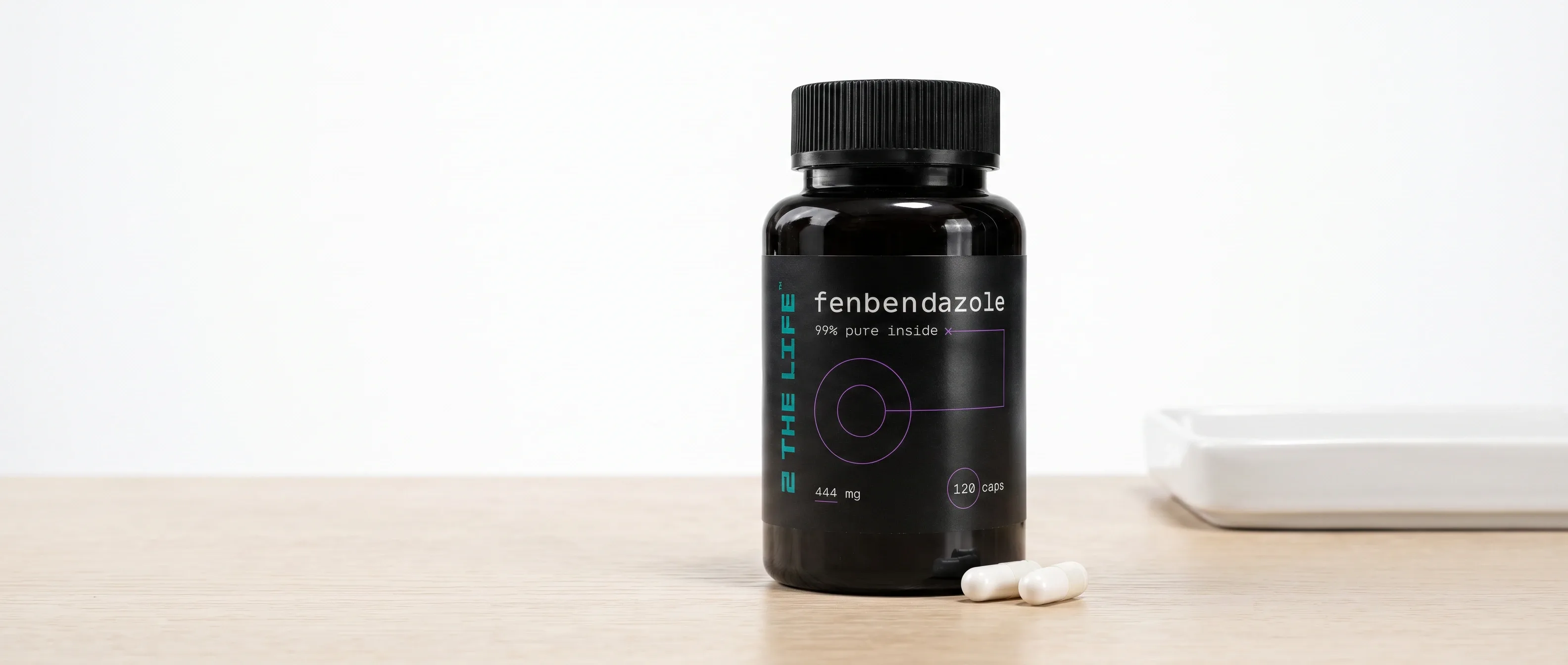
Fenbendazole is a veterinary antiparasitic compound discussed online as a possible cancer treatment. Laboratory findings have motivated research, but they do not establish a safe or effective human cancer protocol. Published reports of liver injury after self-administration are also part of the evidence readers need to consider. [1] [2] [3]
Evidence checked September 10, 2026. This article explains the difference between laboratory findings, online protocols and clinical evidence. It does not provide a dose, supplement stack or self-treatment schedule.
What is fenbendazole approved for?
FDA has approved fenbendazole products for specified veterinary uses; a January 2026 announcement describes an oral dewormer for cattle and goats. That animal approval does not authorize its use as a human cancer treatment. The published human liver-injury report cited below describes fenbendazole as not FDA-approved for human use. [4] [3]
What did the laboratory research find?
In a 2018 study, Dogra, Kumar and Mukhopadhyay investigated fenbendazole in human cancer cells and mouse xenografts. They reported effects on microtubules, p53-associated processes and glucose uptake, as well as reduced tumor growth in their mouse model. These are findings from experimental systems, not evidence of a clinical response in people. [1]
Calling a cell line “human” does not make the experiment a human treatment trial. The study does not establish a dose a patient should take, whether the results apply to a particular cancer, or whether adding fenbendazole to an existing treatment improves outcomes.
Why an online protocol is not a clinical guideline
Online schedules, including those discussed under the Joe Tippens name, should not be read as validated prescribing instructions. A personal account cannot separate the effects of several substances, concurrent medical treatment or other explanations. The sources reviewed here do not establish a fenbendazole regimen that improves survival or controls cancer in people.
A product's stated amount, a period of rest days, a purity claim or a laboratory result cannot establish clinical suitability. This article therefore does not recommend increasing amounts, combining compounds, enhancing absorption or adopting a supplement stack. Questions about experimental options belong with the treating oncology team.
What is known about liver injury?
Yamaguchi and colleagues reported drug-induced liver injury in a patient with lung cancer after self-administration of fenbendazole prompted by social-media information. A separate 2024 report described severe, biopsy-confirmed liver injury associated with self-administration in another patient. These reports provide concrete safety concerns; they are not a method for calculating how often harm occurs. [2] [3]
Neither report establishes a safe long-term schedule or shows that a fixed routine of blood tests makes self-treatment safe. Symptoms and abnormal test results require individual clinical assessment. If you have taken fenbendazole, tell your clinician what product you took and when, including other medicines and supplements.
Discussing experimental treatment options
Bring the actual research paper or trial record to an oncology appointment rather than only a testimonial or dose chart. Ask what type of evidence is available, whether there is an appropriate registered study, and whether an additional substance could interfere with treatment or interpretation of symptoms.
FDA describes clinical trials and, in certain circumstances, expanded access as routes for investigational medicines. These routes have eligibility and oversight requirements; they do not mean that any medicine can be obtained or used experimentally by every patient. [5]
Frequently Asked Questions
Does killing cancer cells in a laboratory mean fenbendazole treats cancer?
No. The cited 2018 study concerns cells and mice. It provides a research rationale, not proof of effectiveness in people or a clinical dosing recommendation. [1]
Is there a dose or weekly schedule recommended by this article?
No. The cited evidence does not establish a safe and effective human cancer regimen. Amounts promoted online are not converted here into instructions for use.
Can liver monitoring make self-treatment safe?
The cited case reports do not establish that a monitoring schedule prevents injury. Monitoring and treatment decisions require a clinician's assessment; they should not be inferred from an online calculator. [2] [3]
Should fenbendazole replace prescribed cancer care?
No. This article does not support replacing or delaying prescribed oncology care. Discuss any interest in investigational treatment with the oncology team.
The useful conclusion from the verified sources is limited: fenbendazole has been studied in experimental cancer models, and human liver-injury reports warrant attention. Those facts do not establish a treatment protocol for patients.
References
- Dogra N, Kumar A, Mukhopadhyay T. Fenbendazole acts as a moderate microtubule destabilizing agent and causes cancer cell death by modulating multiple cellular pathways. Scientific Reports 2018;8:11926. DOI: 10.1038/s41598-018-30158-6.
- Yamaguchi T, Shimizu J, Oya Y, Horio Y, Hida T. Drug-Induced Liver Injury in a Patient with Nonsmall Cell Lung Cancer after the Self-Administration of Fenbendazole Based on Social Media Information. Case Reports in Oncology 2021;14(2):886–891. DOI: 10.1159/000516276.
- Thakurdesai A, Rivera-Matos L, Nagra N, Busch B, Mais DD, Cave MC. Severe Drug-Induced Liver Injury Due to Self-administration of the Veterinary Anthelmintic Medication, Fenbendazole. ACG Case Reports Journal 2024;11(5):e01354. DOI: 10.14309/crj.0000000000001354.
- U.S. Food and Drug Administration. FDA Approves First Generic Fenbendazole Oral Suspension Dewormer for Beef and Dairy Cattle, Goats. 2026-01-22.
- U.S. Food and Drug Administration. How can I get access to a drug that is in testing but has not yet been approved?.