We’re currently experiencing technical difficulties with payment processing, so orders are temporarily paused. We’re working on an upgrade and will be back very soon. Thank you for your patience!

Fenbendazole and ivermectin combination protocol — scientific analysis
Research 18 min read

Fenbendazole + Ivermectin: Why This Combination Is Getting Serious Attention

Back to Research Blog
ECEthan CarterScience Editor & Health Researcher
Fact-checked & evidence-basedUpdated July 24, 2026
Medical Disclaimer: This article is for informational and educational purposes only. It does not constitute medical advice, diagnosis, or treatment recommendations. Always consult a qualified healthcare provider before starting, stopping, or changing any treatment. The information presented here reflects current research and is subject to change as new evidence emerges.

If fenbendazole and ivermectin each show anticancer activity on their own, what happens when you take them together? The case for combining them is actually pretty convincing — not because they do the same thing, but because they attack cancer in completely different ways. This article walks through why the pairing makes sense, what the early (and still limited) evidence shows, what the protocols people use actually look like, and the safety points to keep in mind when you stack two deworming drugs together.

Note: This content is for information only and is not medical advice. Neither fenbendazole nor ivermectin is approved to treat cancer in people. Any decision to use these drugs off-label should be made together with your oncologist.

Why Doctors Combine Cancer Drugs in the First Place

Cancer specialists have known for a long time that a single drug rarely does the job. That's why chemotherapy usually mixes two to four drugs together — each one hitting a different weak spot in the cancer cell. The idea is simple: a cancer cell that manages to survive one type of attack is unlikely to also survive a completely different one at the same time. Using several drugs at once makes it much harder for a stubborn group of cells to slip through and rebuild the tumor.

That same idea is now being applied — informally, and mostly outside of official clinical trials — to the pairing of fenbendazole and ivermectin. Both are cheap, decades-old anti-parasite drugs, and both have built up their own separate stack of early lab research suggesting anticancer effects. We cover each drug on its own in depth elsewhere: see our guides to the fenbendazole cancer protocol and how ivermectin works against cancer. The reason people want to combine them comes down to one thing: they barely do the same job, so they cover for each other's gaps.

Put together, fenbendazole and ivermectin aim to create a situation where:

  • Cancer cells can't divide (fenbendazole breaks down the internal "scaffolding" cells need to split)
  • Cancer cells can't feed themselves (fenbendazole blocks their main sugar supply)
  • Cancer cells can't shrug off chemotherapy (ivermectin interferes with the pump that spits drugs back out)
  • Cancer cells can't hide from the immune system (ivermectin helps make dying cells more "visible" to immune defenses)
  • The most resilient cancer cells get suppressed (ivermectin acts on the survival signals those cells rely on)

This pattern — where the two drugs complement each other instead of repeating each other — is exactly what oncologists look for when they design a good drug combination. It's also the main reason this pairing has become the most talked-about "dual protocol" in the online community that grew out of the viral Joe Tippens protocol. That original protocol combined fenbendazole with CBD, curcumin, and vitamin E, and many people have since added ivermectin to it.

How the Two Drugs Complement Each Other

To see why this combination is interesting, it helps to lay the two drugs' known effects side by side. Fenbendazole was originally made as a dewormer for livestock and pets. The reason it caught the attention of cancer researchers is that it latches onto a protein called β-tubulin — the building block of the tiny internal "scaffolding" (microtubules) that cells use to divide. That's similar (though not identical) to how some standard chemotherapy drugs like paclitaxel and vincristine work [2]. Ivermectin, which comes from a soil bacterium, works through an almost completely different set of routes: it quiets down growth signals cancer cells depend on (the Wnt and PAK1 pathways) [4][5], and it interferes with the cell's drug-removal pump (called P-glycoprotein, or P-gp) [1][4].

Infographic comparing how fenbendazole and ivermectin target cancer through different mechanisms — fenbendazole hits cell division, glucose supply and blood supply while ivermectin blocks the drug-resistance pump, Wnt growth signal and immune escape; 8 cancer mechanisms hit with only 2 overlapping.
Fenbendazole and ivermectin hit largely different cancer mechanisms — only two of eight overlap.
What it targets Fenbendazole Ivermectin
Cell division✅ Breaks down the division scaffolding✅ Also disrupts cell division
Sugar / energy supply✅ Blocks glucose uptake
Resistance to chemo✅ Lowers the drug-removal pump
Triggering cell death✅ Switches on the p53 "self-destruct"✅ Triggers other cell-death routes
Growth signaling (Wnt)✅ Turns it down
Resilient "stem-like" cells✅ Suppresses them
Immune visibility✅ Helps expose cells to the immune system
Blood-supply to tumor✅ Limits new vessel growth

The key takeaway: the two drugs hardly overlap. That means putting them together doesn't just double up on the same effect — it spreads the attack across many of the tricks cancer uses to survive. In theory, a cancer cell that finds a way around fenbendazole (say, by switching how it divides, or by feeding on a different fuel) would still run straight into ivermectin's separate attack on its growth signals and drug pump. This is the same reasoning behind why multi-drug chemotherapy combinations tend to work better than any single drug alone.

Why Hitting Different Targets Matters

When two drugs push on the same pathway, their effects usually just add up, and cancer tends to resist both the same way. When they push on separate pathways, you're more likely to get a bonus effect where the combination does more than the two would on their own. Nobody has run a formal lab study measuring that bonus for fenbendazole plus ivermectin specifically, but the logic mirrors combinations that have been studied — such as pairing a division-blocking drug with one that shuts off the cell's drug-removal pump in treatment-resistant tumors.

Why These Two Drugs in Particular?

There are plenty of experimental cancer ideas floating around, so it's fair to ask why fenbendazole and ivermectin have risen to the top of the do-it-yourself list. A few practical reasons stand out. Both are cheap — often a few dollars for a course, compared with the eye-watering price of many cancer drugs. Both have decades of real-world use in animals (and, in ivermectin's case, in millions of people for parasite infections), so their basic safety profile at normal doses is unusually well understood for drugs being used off-label. Both are taken by mouth at home, without infusions or hospital visits. And both already have a stack of early laboratory research pointing at anticancer activity, which gives people at least a scientific starting point rather than pure guesswork.

None of that makes them proven cancer treatments — cheap and safe-at-normal-doses is not the same as effective against cancer. But those features explain why this particular pair, rather than some other combination, became the one that spread through patient communities and why so many people are willing to try it while the formal research slowly catches up.

The Drug-Resistance Angle

Maybe the most practical part of this combination isn't the two drugs attacking cancer directly. It's the way ivermectin may help other drugs work better — including fenbendazole itself, and any chemotherapy taken at the same time.

One of the main reasons chemotherapy eventually stops working is a process called multidrug resistance. A big driver of it is a pump on the cancer cell's surface — P-glycoprotein (P-gp) — that physically shoves chemo drugs (and possibly fenbendazole) back out of the cell before they can do their job. In a 2019 lab study, Jiang and colleagues found that ivermectin restored the effect of two chemo drugs in resistant cancer cells [1]. Importantly, ivermectin didn't simply plug the pump like a cork. Instead, it worked further upstream: it dialed down the survival signals the cell uses (the EGFR/ERK/Akt/NF-κB pathway), which in turn caused the cell to make less of the pump in the first place [1]. Fewer pumps means chemo drugs stay inside the cell longer and hit harder.

This matters for a fenbendazole–ivermectin combination. If fenbendazole is one of the drugs that the pump pushes out of cancer cells (a reasonable idea, though not firmly proven), then adding ivermectin could help more fenbendazole stay inside the tumor cells that have ramped up this pump. In plain terms: ivermectin may keep the door shut so fenbendazole sticks around and works better — a helpful bonus on top of the fact that the two drugs already hit different targets.

A Couple of Other Ways They May Work Together

Starve First, Then Destabilize

Fenbendazole cuts off a cancer cell's easy sugar supply. Most solid tumors run on a wasteful, sugar-hungry form of energy production, so cutting that supply puts them under real stress. A cell under that kind of energy stress leans harder on backup survival signals (again, the Wnt and PAK1 pathways) just to stay alive. Ivermectin happens to target exactly those backup signals. So the stress created by fenbendazole may leave cancer cells more exposed, not less, to ivermectin. It's a "starve them, then knock out their backup plan" one-two punch — a pattern also seen in other combination approaches that pair a metabolism-blocking drug with a signal-blocking drug.

Making Cancer Cells Easier for the Immune System to See

One of ivermectin's more recently studied effects is that it can cause a type of cell death that acts like an alarm bell for the immune system [6] — dying cells release signals that call in immune cells and help them recognize the tumor. Ivermectin has also been shown, in some tumor studies, to lower a "don't attack me" signal (PD-L1) [7] that cancer uses to hide. Fenbendazole's role here is more indirect: by killing cancer cells, it adds to the pile of dying cells whose leftovers an already-alerted immune system could learn to target. This part is more of an educated guess pieced together from separate lab findings than a proven combined effect — but it's a plausible extra layer of teamwork.

What the Protocols Actually Look Like

There is no official, medically validated dosing schedule for combining fenbendazole and ivermectin in cancer patients. What exists instead is a patchwork: doses people report using themselves, animal doses scaled to human body weight, and informal advice passed around in the online cancer communities that grew out of the Joe Tippens protocol. The table below shows one commonly cited setup — it is not a validated medical prescription.

Item Amount Schedule
Fenbendazole222–444 mg3 days on / 4 days off
Ivermectin12–18 mgDays 1–3 each week, with a fatty meal
Vitamin E (succinate)400–800 IUDaily
Curcumin (with piperine)500–1000 mgDaily
Weekly fenbendazole and ivermectin dosing schedule infographic — fenbendazole 222–444 mg and ivermectin 12–18 mg taken 3 days on, 4 days off, with ivermectin taken alongside a fatty meal.
A commonly shared weekly pattern: 3 days on, 4 days off, with ivermectin taken alongside a fatty meal.

A few reasons this setup looks the way it does. Fenbendazole doesn't dissolve well in water and is usually taken on an "on/off" cycle — partly to copy how it's used in animal deworming, and partly because daily dosing hasn't shown a clear extra benefit in the available animal data. Ivermectin dissolves in fat, and the body absorbs far more of it with a fatty meal — one study found this roughly 2.5-fold increased the amount absorbed versus an empty stomach [8], which is why most protocols say to take it with food. Vitamin E and curcumin are usually added not as strong cancer fighters but for general antioxidant and anti-inflammatory support, and curcumin is paired with piperine (a black-pepper extract) because that helps the body absorb it.

Infographic showing ivermectin absorption roughly 2.5 times higher when taken with a fatty meal versus on an empty stomach.
Taking ivermectin with a fatty meal roughly doubles absorption compared with an empty stomach.

Should You Take Both Drugs on the Same Days?

People in the patient community disagree on this, and no proper trial has settled it. One camp lines both drugs up on the same three "on" days each week, betting that hitting many targets at once gives cancer cells the least chance to adapt. The other camp spreads them out — for example, taking ivermectin more steadily through the week while cycling fenbendazole — betting that a constant, low level of ivermectin keeps fenbendazole absorbing and working better all week, not just on the overlapping days. Without real data, this comes down to personal preference rather than any established rule.

How Long Do People Stay On It, and Do They Cycle Off?

There's no official answer here either, because there's no trial telling anyone how long to continue. In practice, people in these communities tend to treat it as a long-run effort rather than a short course — often staying on the weekly on/off rhythm for many months, and adjusting based on how their scans, blood work, and symptoms trend over time. Some take planned breaks (for example, a week off every couple of months) to give the liver a rest and to check whether anything changes when the drugs are paused. Others taper down to a lower "maintenance" schedule if they reach a stable point. The honest takeaway is that duration is being figured out person by person, ideally with a doctor watching the labs — not according to any validated schedule.

Safety When Combining Them

Stacking two drugs increases the chances of side effects, drug interactions, and the need for monitoring — even when neither drug is especially dangerous at normal doses.

  • From fenbendazole: Liver injury has shown up in a handful of case reports [9] involving off-label, long-term human use, generally at doses well above the normal animal-equivalent range. Practitioners who support this protocol commonly recommend a baseline liver blood test and repeat tests every 2–4 weeks.
  • From ivermectin: At very high doses, ivermectin can affect the nervous system. The risk is higher in people with cancer that has spread to the brain, or in people with a particular genetic variation that normally helps keep ivermectin out of the brain. Warning signs at those extreme doses include unsteadiness, tremor, and in severe cases coma — but these are reported almost only at doses far above the normal anti-parasite range.
  • Together: No formal studies have looked at how this specific pair interacts in humans. No dangerous combined effect has turned up in the case reports and observational data we have — but "no reported problem" is not the same as "proven safe." It mostly reflects how little formal research exists.

Bottom line on safety: tell your oncologist. They can check your blood tests, watch for interactions with any chemo you're on, and catch anything worrying early. This matters especially if you take blood thinners, other medications processed by the same liver enzyme (CYP3A4), or medications that act on the brain, since ivermectin is handled by that same enzyme and drug pump.

How People Check Whether It's Actually Working

One of the hardest parts of any do-it-yourself protocol is knowing whether it's doing anything at all. Feeling better (or worse) is unreliable — cancer, its standard treatments, stress, and diet can all move how you feel around, and none of that reliably tracks what the tumor is doing. That's why people who approach this seriously lean on objective measures rather than gut feeling.

  • Imaging: Scans (CT, MRI, PET, or ultrasound depending on the cancer) are the most direct way to see whether a tumor is shrinking, stable, or growing. These are usually ordered by the treating oncologist on their normal schedule.
  • Tumor markers: For some cancers, blood markers (for example PSA in prostate cancer or CA-125 in ovarian cancer) can be tracked over time to spot a trend earlier than the next scan.
  • Liver and general blood work: Regular blood tests do double duty — they watch for side effects (especially liver strain) and give a broader picture of how the body is holding up.
  • A simple symptom and dose log: Writing down doses, dates, side effects, and symptoms makes it far easier to spot real patterns later, and gives your doctor something concrete to work with.

The key idea is to change one thing at a time and give it long enough to show an effect, so that if something does shift you have at least some chance of knowing what caused it.

What the Real-World Data Shows So Far

There is no gold-standard clinical trial yet for the fenbendazole–ivermectin pair specifically. The closest evidence comes from a related combination: ivermectin plus mebendazole, a very close cousin of fenbendazole that works the same way on cell division. A 2026 observational study followed 197 cancer patients taking ivermectin together with mebendazole and reported that 84.4% of them saw some clinical benefit, with 48.4% showing tumor shrinkage or no sign of disease at the six-month mark [3]. That's a meaningful real-world signal, but it comes with big caveats. It was an observational study with no comparison group, and patients chose this treatment themselves — which raises the possibility that healthier or more responsive patients were the ones more likely to start and stick with it. Without a control group, without blinding, and with patients getting different standard treatments alongside it, there's only so much you can read into the numbers. Still, an 84.4% benefit rate across 197 patients is a big enough and consistent enough signal that it has renewed interest in formally studying these dewormer-plus-ivermectin combinations.

Infographic of early observational data on the ivermectin plus mebendazole combination — 84.4% of 197 patients reported some benefit and 48.4% had tumor shrinkage or no disease at 6 months, from an observational cohort with no control group.
Early observational data from the related ivermectin + mebendazole combination (197 patients, no control group).

If you want the evidence behind each drug on its own, our companion articles go into much more detail: the fenbendazole cancer protocol covers the cell-division and metabolism effects, ivermectin's anticancer research covers the signaling and immune effects, and the Joe Tippens protocol tells the origin story and the original supplement stack that many patients later modified to add ivermectin.

What It Would Take to Make This Mainstream Medicine

For a combination like this to move from personal stories and lab findings into accepted cancer care, it would normally need to clear several steps that haven't happened yet: careful lab studies confirming the two drugs really do add up to more than the sum of their parts (not just look like they should on paper), animal studies comparing the combination directly against each drug alone, early safety trials in cancer patients to pin down doses, and finally larger trials with a proper comparison group. Right now, the fenbendazole–ivermectin combination has some patient case reports, a sensible biological rationale, and one related observational study (ivermectin plus mebendazole) — but it hasn't gone through those earlier, more rigorous steps. That doesn't mean the reasoning is wrong; it means the proof of real-world results for this exact pairing is still early-stage.

Common Mistakes People Make

Because this is a self-directed approach with no official playbook, the same avoidable errors come up again and again in patient communities. A few worth flagging:

  • Hiding it from the oncologist. The single most common and most dangerous mistake. Your doctor can only watch for interactions and liver problems if they know what you're taking. Fear of being judged leads some people to stay silent — but a good oncologist would rather know.
  • Chasing higher and higher doses. More is not automatically better, and the serious side effects of both drugs (liver strain, nervous-system effects) show up mainly at high doses. Escalating on your own raises risk without any proof of extra benefit.
  • Taking ivermectin on an empty stomach. Skipping the fatty meal can cut how much the body absorbs, quietly undermining the whole point of taking it.
  • Buying from sketchy sources. Unregulated products can be under-dosed, over-dosed, or contaminated, which makes results impossible to interpret and can be unsafe.
  • Stopping standard treatment. Some people quietly drop proven, doctor-recommended treatment in favor of the protocol. There is no evidence supporting that trade, and it can be a costly gamble.
  • Giving up after a week or two. These are slow-moving effects if they happen at all; judging it over a few days tells you almost nothing.

Practical Things to Sort Out Before Starting

  • Talk it through with your oncologist first, especially if you're on active chemotherapy, immunotherapy, or blood thinners — there are several possible drug interactions to watch for.
  • Get a baseline liver blood test before you start, then repeat it every 2–4 weeks, especially in the first two months.
  • If you know your P-gp genetic status, keep it in mind — it matters most for people with cancer in the brain, given ivermectin's nervous-system risk in that situation.
  • Buy both drugs from reputable, quality-tested suppliers — purity and dosing consistency vary a lot in the unregulated markets many patients rely on for off-label use.
  • Track your symptoms and lab results over time instead of going by how you feel alone, since both drugs can cause vague effects (tiredness, stomach upset) that are hard to tell apart from the disease itself or unrelated causes.

Recommended Products

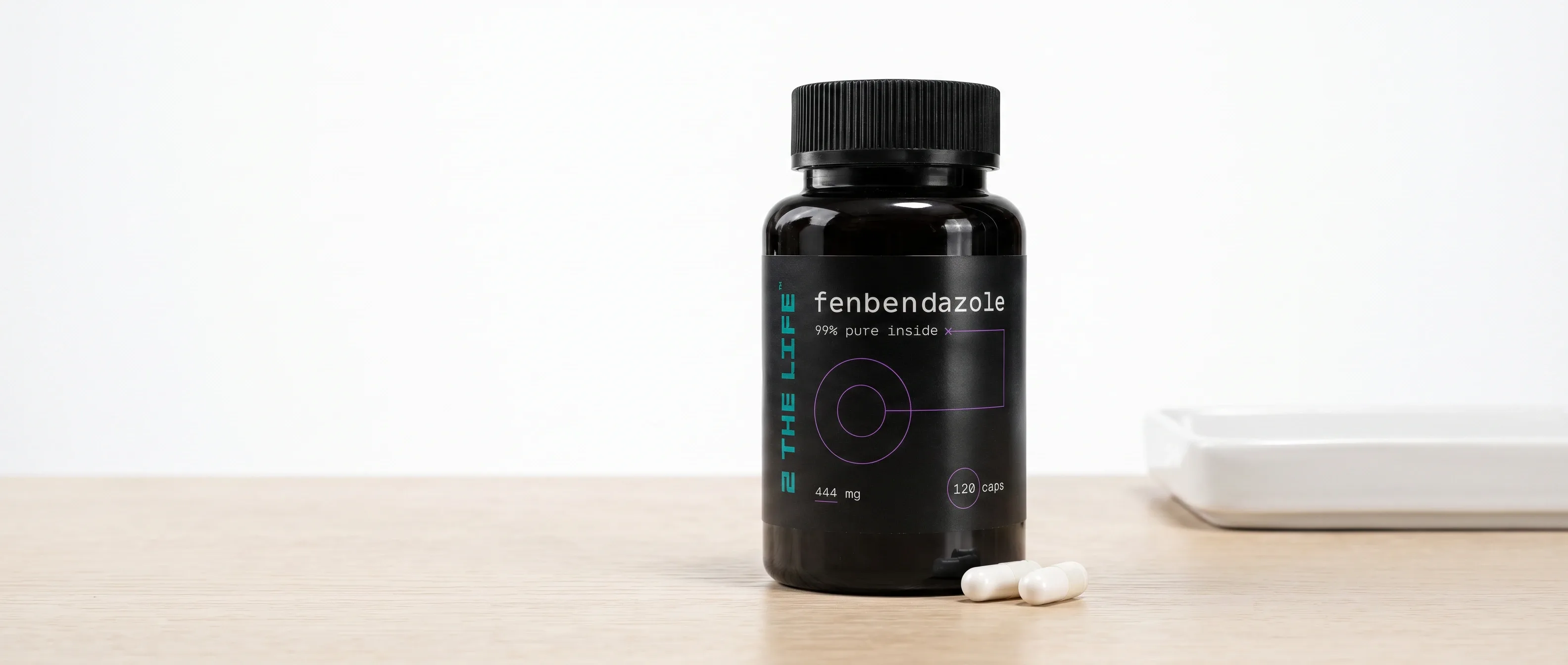
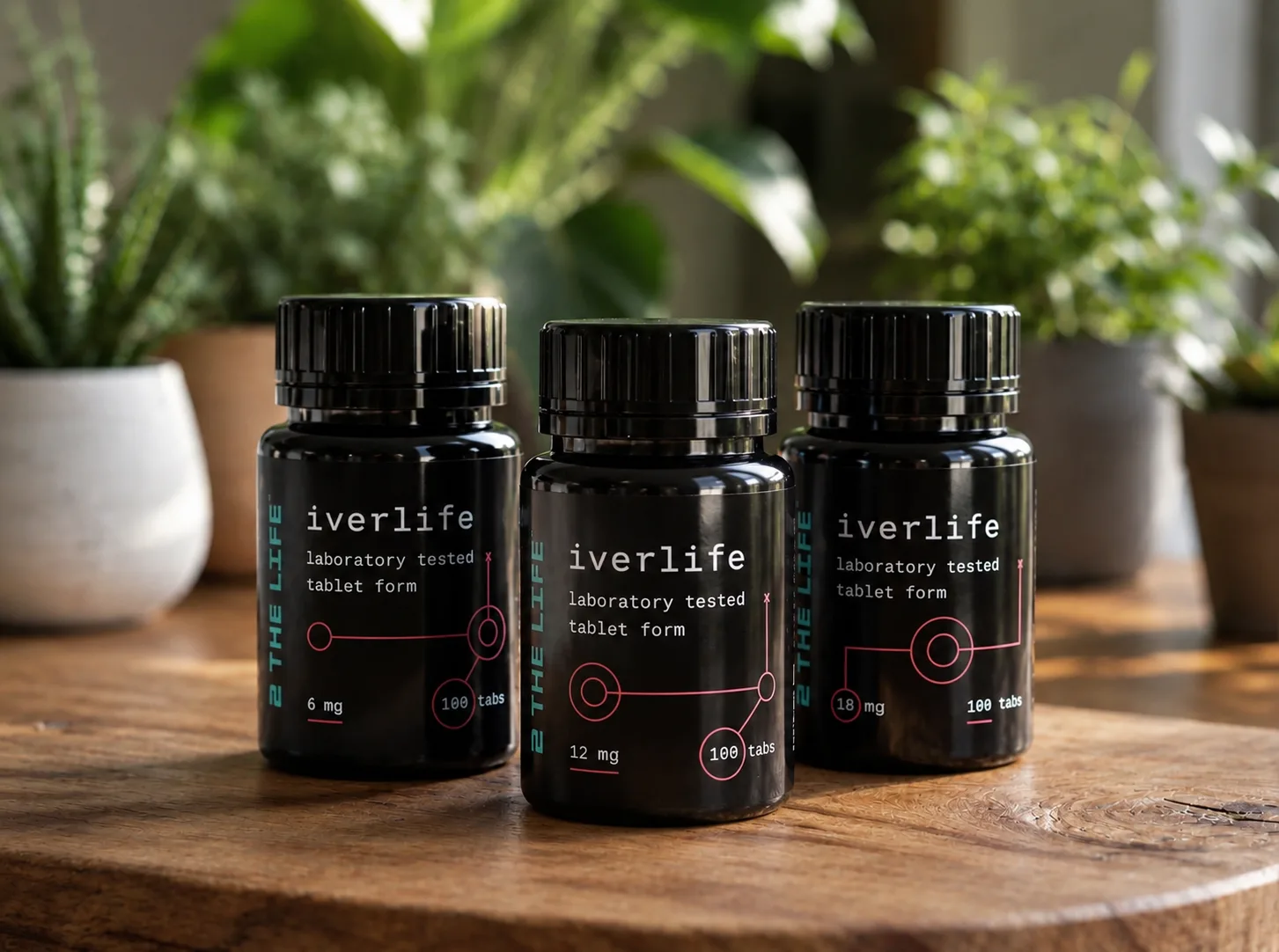
Independently lab-tested for purity (99%+). Ships from the United States.

Frequently Asked Questions

Why combine fenbendazole and ivermectin?

Because they attack cancer in almost completely different ways. Fenbendazole goes after a cancer cell's structure (the internal scaffolding it needs to divide) and its sugar supply, while ivermectin goes after growth signals, drug resistance, and the cell's ability to hide from the immune system. Together they cover far more of cancer's survival tricks than either one alone — the same reasoning behind standard multi-drug chemotherapy.

Is there clinical trial data for the combination?

There are no completed human clinical trials of the exact fenbendazole + ivermectin combination. The closest evidence is a 2026 observational study of ivermectin plus mebendazole (a close cousin of fenbendazole) in 197 patients, which reported an 84.4% clinical benefit rate. Each drug on its own has a growing body of early lab research, but formal randomized trials of the combination don't exist yet.

What doses are used in the combination protocol?

One commonly shared, patient-community setup uses fenbendazole 222–444 mg (3 days on / 4 days off) plus ivermectin 12–18 mg (taken on days 1–3 each week, with a fatty meal to help absorption). Vitamin E succinate (400–800 IU) and curcumin with piperine (500–1000 mg) are common daily add-ons. None of these doses have been proven in controlled human cancer trials.

Should the two drugs be taken on the same days?

There's no proven answer. Some people take both on the same three "on" days each week to hit cancer from multiple angles at once. Others take ivermectin more steadily through the week while cycling fenbendazole, on the idea that a constant low level of ivermectin helps fenbendazole absorb and work better. Without trial data, it comes down to personal preference — discuss it with your doctor.

Is the combination safe?

Neither drug is especially dangerous at normal doses, but combining them adds more chances for side effects and interactions. The main concerns are liver strain from long-term high-dose fenbendazole and nervous-system effects from very high-dose ivermectin. There are no formal human studies of this specific pair, so the safest approach is regular liver blood tests and open communication with your oncologist, especially if you take chemotherapy, blood thinners, or brain-active medications.

Can I take this alongside chemotherapy or immunotherapy?

Only under your oncologist's supervision. In theory ivermectin's effect on the drug-removal pump could change how some chemotherapy drugs behave, and both drugs share liver-processing pathways with many medications, so interactions are possible. This is exactly why your treatment team needs to know what you're taking — they can check for conflicts and monitor your blood work. Never quietly add it on top of active treatment without telling them.

How long before I would know if it's working?

There's no fixed timeline, but any real effect on a tumor is slow — measured in weeks to months, not days. That's why people rely on objective checks (scans, tumor markers, blood work) on the oncologist's normal schedule rather than on how they feel day to day. Judging it after a week or two tells you almost nothing.

Why take ivermectin with a fatty meal?

Ivermectin dissolves in fat, so the body absorbs much more of it when it's taken with food that contains fat — one study found roughly a 2.5-fold increase compared with an empty stomach. Taking it fasted can quietly cut how much actually gets into your system, which is why most protocols specifically say to take it with a meal.

Sources & References

  1. Jiang L, Wang P, Sun Y-J, Wu Y-J. Ivermectin reverses the drug resistance in cancer cells through EGFR/ERK/Akt/NF-κB pathway. Journal of Experimental & Clinical Cancer Research. 2019;38:265. pubmed.ncbi.nlm.nih.gov/31215501
  2. Dogra N, Kumar A, Mukhopadhyay T. Fenbendazole acts as a moderate microtubule destabilizing agent and causes cancer cell death by modulating multiple cellular pathways. Scientific Reports. 2018;8:11926. nature.com/articles/s41598-018-30158-6
  3. Real-World Clinical Outcomes of Ivermectin and Mebendazole in Cancer Patients: Results from a Prospective Observational Cohort. 2026. zenodo.org/records/19455636
  4. Juarez M, Schcolnik-Cabrera A, Dueñas-González A. The multitargeted drug ivermectin: from an antiparasitic agent to a repositioned cancer drug. American Journal of Cancer Research. 2018;8(2):317-331. pubmed.ncbi.nlm.nih.gov/29511601
  5. Melotti A, Mas C, Kuciak M, et al. The river blindness drug Ivermectin and related macrocyclic lactones inhibit WNT-TCF pathway responses in human cancer. EMBO Molecular Medicine. 2014;6(10):1263-1278. doi.org/10.15252/emmm.201404084
  6. Draganov D, et al. Modulation of P2X4/P2X7/Pannexin-1 sensitivity to extracellular ATP via Ivermectin induces a non-apoptotic and inflammatory form of cancer cell death. Scientific Reports. 2015;5:16222. nature.com/articles/srep16222
  7. Draganov D, et al. Ivermectin converts cold tumors hot and synergizes with immune checkpoint blockade for treatment of breast cancer. npj Breast Cancer. 2021;7:22. pubmed.ncbi.nlm.nih.gov/33654071
  8. Guzzo CA, Furtek CI, Porras AG, et al. Safety, tolerability, and pharmacokinetics of escalating high doses of ivermectin in healthy adult subjects. The Journal of Clinical Pharmacology. 2002;42(10):1122-1133. pubmed.ncbi.nlm.nih.gov/12362927
  9. Yamaguchi T, Shimizu J, Oya Y, et al. Drug-Induced Liver Injury in a Patient with Nonsmall Cell Lung Cancer after the Self-Administration of Fenbendazole Based on Social Media Information. Case Reports in Oncology. 2021;14(2):886-891. pmc.ncbi.nlm.nih.gov/articles/PMC8255718

Read Also

Shop the Full Protocol

Lab-tested · 99%+ purity · Free US shipping on qualifying orders

Browse All Products