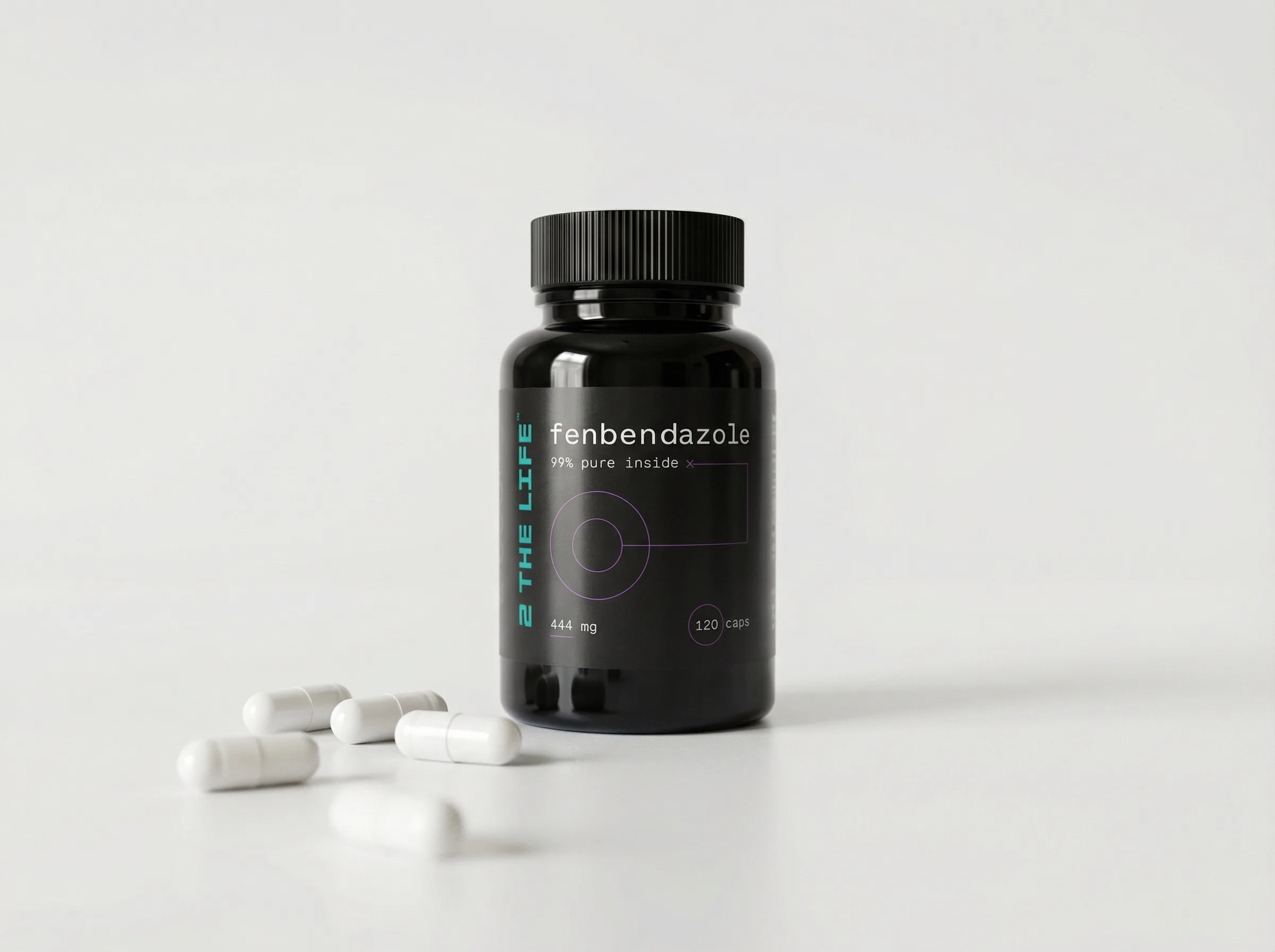
A search for a fenbendazole dosage guide should begin with a clear limitation: fenbendazole is not FDA-approved for human use, and there is no FDA-approved human regimen to follow. A number printed on a capsule label cannot supply that missing medical evidence. This article explains the distinction without providing an intake schedule or instructions for self-treatment. [1] [4]
Evidence reviewed: September 10, 2026.
Veterinary approval answers a different question
Fenbendazole has established veterinary uses. For example, the FDA's January 2026 approval of Defendazole concerns an oral suspension for specific parasites in cattle and goats. It applies to that animal-drug product and its approved uses. It does not authorize a human cancer treatment or establish instructions for a different capsule product. [1]
Online descriptions sometimes treat the history of animal use as a ready-made human safety margin. That inference is not supported by an animal approval alone. The relevant question is whether evidence addresses the actual product, people, condition and outcome being discussed.
What laboratory research can establish
Dogra and colleagues studied fenbendazole in cancer cells and mouse models. Their 2018 paper reported effects involving tubulin, glucose-related processes and tumor growth in those experiments. These findings help explain scientific interest, but the experiments were not a clinical comparison of human treatment regimens. They do not turn a laboratory observation into a personal prescription. [2]
When reading a research claim, first identify the study population. A reference to human cancer cells can mean cells grown in a laboratory, rather than people receiving treatment. Check what researchers measured and whether the claim on a website goes beyond that result.
A label amount does not fill the evidence gap
Product strength describes a declared quantity in a unit of product. It does not establish who should use it, a safe exposure, a treatment duration or a benefit for a particular disease. Repeating a community schedule across several websites does not make those websites independent clinical evidence.
The same distinction applies to a calculator. Its arithmetic can be correct while the clinical assumptions remain unproven. A generated calendar, a green indicator or a downloadable document should not be interpreted as evidence that a human regimen is safe. Our product-strength comparison explains what the label numbers actually describe.
Safety concerns are documented, but their frequency is uncertain
A 2021 report described liver injury after a cancer patient began taking fenbendazole based on social-media information. A separate 2024 report described severe liver injury with biopsy findings following self-administration. These are individual case reports, not estimates of how often harm occurs. They cannot define a safe starting amount or support a promise that monitoring prevents injury. [3] [4]
If you have already used an unapproved product, tell your treating clinician what you used and provide its packaging and ingredient information. This helps the clinical team interpret symptoms and unexpected test results. The 2021 report illustrates why unreported self-administration can complicate care. [3]
Questions that help evaluate a claim
- Does the cited source concern cells, animals or people?
- Does it evaluate the same substance and formulation?
- Are clinical outcomes reported, or only a proposed mechanism?
- Are adverse events and study limitations described alongside benefits?
- Can the original publication be opened and checked?
FDA guidance describes clinical trials and, in some circumstances, expanded access as regulated ways to access investigational drugs. Eligibility and availability require a separate assessment; this article does not identify an available fenbendazole program. A treating specialist can discuss appropriate research options and established care. [5]
2TheLife's Terms of Service state that its products are not intended for human consumption. Product information and the process for requesting batch documentation do not change that limitation.
Sources
- FDA. Defendazole veterinary approval announcement, January 22, 2026.
- Dogra N, Kumar A, Mukhopadhyay T. Scientific Reports. 2018;8:11926. Primary preclinical research.
- Yamaguchi T and colleagues. Case Reports in Oncology. 2021;14:886–891. Human liver-injury case report.
- Thakurdesai A and colleagues. ACG Case Reports Journal. 2024;11:e01354. Human liver-injury case report.
- FDA. Access to a drug that is being tested but has not been approved.