BPC-157 research includes laboratory experiments, animal studies and a small, uneven body of human evidence. These sources answer different questions. A biological effect in a cell culture may justify further investigation, but it does not establish that a treatment improves recovery, symptoms or long-term health in people.
Evidence checked September 10, 2026. This is a selected evidence review, not a systematic review of every publication or a treatment protocol.
What two preclinical studies show
A 2003 experiment studied surgically severed Achilles tendons in rats. Investigators reported differences in mechanical strength, function and tissue appearance compared with controls. The controlled injury model lets researchers study repair under defined conditions. It does not reproduce every human tendon injury, chronic pain condition or rehabilitation program. [1]
A 2014 study examined tendon fibroblasts obtained from rats. BPC-157 increased growth-hormone receptor expression; further experiments examined responses to added growth hormone and related signaling. This is mechanistic evidence from cultured cells. It does not demonstrate that a person taking BPC-157 heals faster, gains muscle or returns to sport sooner. [2]
For either finding to support patient care, researchers would need to show that the relevant exposure is achievable, that the effect persists in humans and that any benefit outweighs harm. Laboratory pathway names cannot substitute for those steps.
Human research exists, with substantial limits
It would be inaccurate to say that BPC-157 has never been studied in people. Three published reports illustrate both the research activity and the limits of interpretation:
- Knee pain, 2021: a retrospective review identified 17 patients, with 16 responding by telephone. There was no control group, and some received an additional peptide. Recalled symptom change cannot isolate the treatment effect or prove structural healing. [3]
- Interstitial cystitis, 2024: a pilot involved 12 women receiving bladder-wall injections. Its uncontrolled design and symptom questionnaire limit conclusions; it did not test oral products or establish a general treatment for digestive or urinary symptoms. [4]
- Intravenous safety, 2025: two previously exposed participants underwent brief monitoring. A study this small cannot determine long-term safety or detect uncommon adverse effects. It was not an efficacy trial. [5]
There were also earlier placebo-controlled rectal studies, including an ulcerative-colitis trial with 53 randomized participants. FDA's 2026 briefing describes these from meeting abstracts and highlights incomplete reporting. Their existence should be acknowledged without presenting them as definitive treatment evidence. [6]
Why improvement is not the same as a treatment effect
Pain and other symptoms can fluctuate. Participants may change rehabilitation, medications or activity, and expectations can affect self-reported outcomes. A comparison group, random assignment, masking where feasible and predefined outcome measures help researchers separate those influences from the intervention being tested.
Study size and follow-up also matter. A short report with no observed adverse events cannot establish the rate of uncommon or delayed problems. Findings from one formulation, route or condition should not be transferred to another without supporting evidence. Independent replication would make any consistent signal more persuasive.
Safety remains an evidence question
FDA's compounding safety material identifies potential immune reactions, peptide impurities and difficulties characterizing the ingredient, alongside limited safety information. These concerns require investigation; they are not resolved by calling a peptide natural or pointing to favorable animal results. [7]
What would change the assessment?
Useful progress would include fully reported randomized trials for a defined condition, transparent product characterization, clinically meaningful outcomes and systematic monitoring over an appropriate duration. Readers should look for published results, not just registrations, laboratory mechanisms or testimonials.
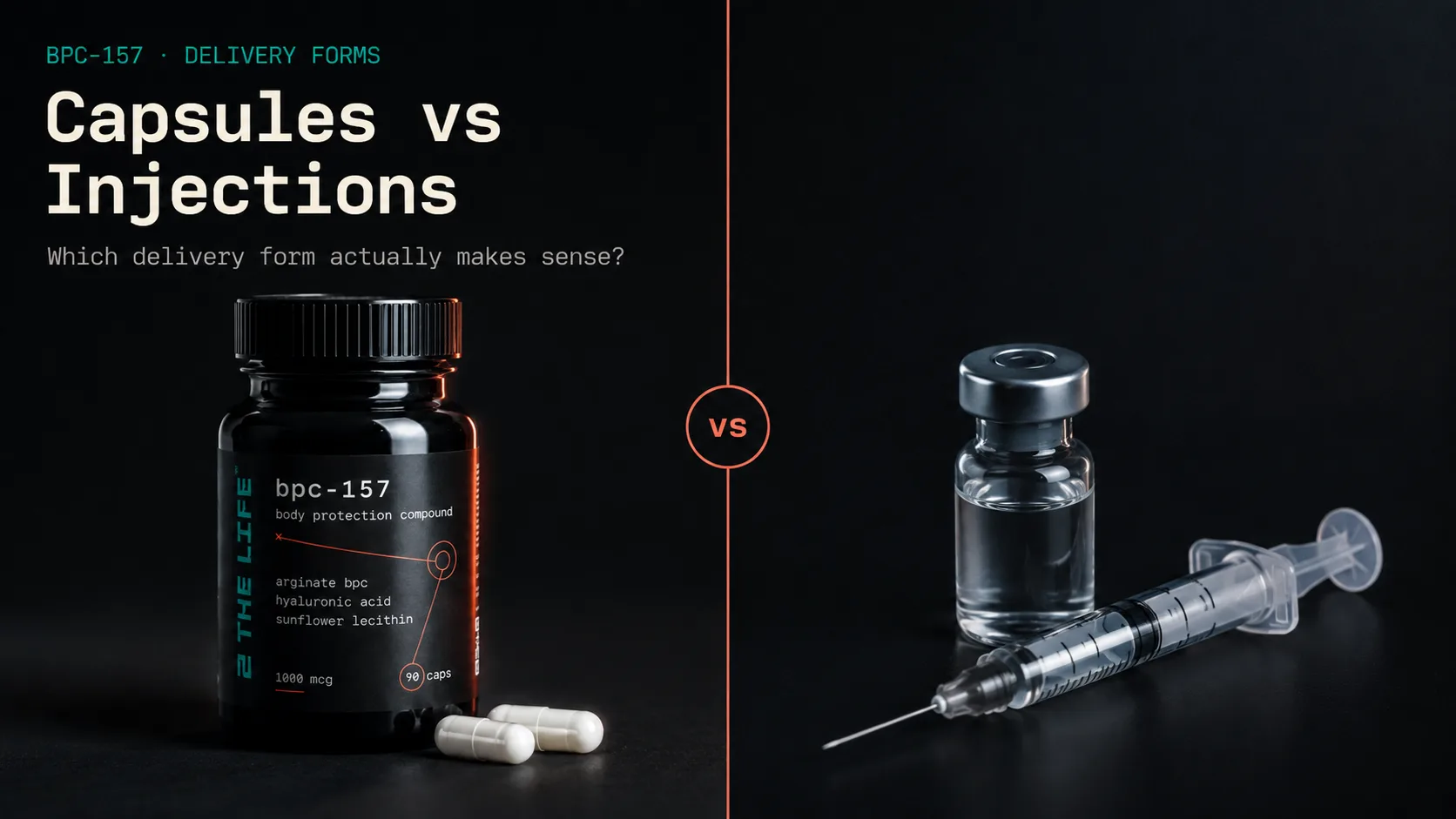
For a personal health decision, discuss symptoms and established options with a qualified clinician rather than using this research as a self-treatment plan. Our capsules-versus-injections guide explains why the current evidence does not identify a preferred BPC-157 route.
Sources
- Staresinic et al.: rat Achilles-tendon experiment. J Orthop Res. 2003;21(6):976–983. DOI: 10.1016/S0736-0266(03)00110-4.
- Chang et al.: growth-hormone receptors in rat tendon fibroblasts. Molecules. 2014;19(11):19066–19077. DOI: 10.3390/molecules191119066.
- Lee and Padgett: knee-pain retrospective study. Altern Ther Health Med. 2021;27(4):8–13.
- Lee, Walker and Ayadi: interstitial-cystitis pilot. Altern Ther Health Med. 2024;30(10):12–17.
- Lee and Burgess: intravenous safety pilot. Altern Ther Health Med. 2025;31(5):20–24.
- FDA: July 2026 BPC-157 briefing, human studies and Appendix 1.
- FDA: compounding safety information, BPC-157 entry.